Utilising education, distraction and rewards to improve the mental health of children with long-term illnesses.
TOKEVENTURE
Design Brief: Create a product that helps reduce the procedural anxiety of children with long-term illnesses.
Product Overview: TOKEVENTURE aims to reduce PPA by utilising a systems product approach. This involves using education before the procedure (education tokens and phone application), distraction during the procedure (games on the token player) and the use of rewards after the procedure (token collector). This is targeted towards 3 - 7-year-old children.
Year : 2022 (Capstone Project)
Skills Used: Research, analytics, sketching, prototyping, Raspberry Pi, CAD modelling, 3D printing, laser cutting, Illustrator
Recognition : Good Design Award, Adobe Creative Award, Nominated for Graduate of the Year.
Paediatric procedural anxiety (PPA) occurs when children experience anxiety when admitted to hospitals and clinics for procedures, check-ups and investigations. Through this, they may experience exemplified pain, fear and distress. Increased PPA can cause the child to not cooperate with treatment, thereby leading to worse or delayed treatment outcomes.
This begs the question, how can paediatric procedural anxiety be reduced for children with long-term illnesses?
THE PROBLEM
DISCOVER & DEFINE
RESEARCH
Prior to the design of the product, both primary and secondary research was conducted. This involved 12 interviews with medical professionals (Paediatricians, General Practitioners, Play Therapists etc.) and 2 surveys.
One survey focussed on how one’s built environment influences their emotions (sent to architects) and the other was focused on paediatric anxiety in medical settings (sent to individuals in the medical field).
-
Paediatric procedural anxiety (PPA) occurs when children experience anxiety when admitted to hospitals and clinics for procedures, check-ups and investigations. Through this they may experience exemplified pain, fear and distress. Increased PPA can cause the child to not co-operate with treatment, thereby leading to worse or delayed treatment outcomes.
-
Fear of the unknown (do not know what is going to happen to them)
Clinical environmental settings
Previous negative experiences
-
Education prior to the procedure about what is going to happen
Distraction during the procedure (games, sounds etc.)
Rewards post procedure
After research was conducted and the design problem was narrowed down, 5 main opportunity areas and their associated criteria were identified,
OPPORTUNITY AREAS & DESIGN CRITERIA
-
Incorporation of social stories
Incorporation of play and mimicry (utilising animals, nature and people)
Consideration of cognitive abilities
Educate about the process of the procedure, what will happen, feelings that may occur and why it is happening
-
Incorporation of ‘alternate worlds’
Elements of storytelling and or play
Interactivity - colour, sound and tactile feel
The ability for all ages (age range) and cognitive abilities to be able to use the product
Space considerations and ability to use in different environments and procedures
-
Colourful and child friendly
Elements of familiarity and safety to decrease PPA
Adaptable to different elements and space requirements depending on the procedure and room
Incorporation of ‘nature’ elements - greenery, animals etc.
Ability to distract the patient from the procedure
-
Ability to use product with or without parents (can be modular or change accordingly)
Potential ability to calm both the parent and patient down during the procedure
Help involve the parent during the process of explanation and education
Usable by different age anthropometrics
-
Provide individuals with the ability to collect different items
Colourful and interesting to increase desirability
Catered to various types of people (cognitive ability, age, language abilities)
Paired with other design interventions
Size - carry around and bring to appointments
DEVELOP
INITIAL DESIGN CONCEPTS
Concept 1 : Reward System
Concept 2 : Immersive Adventure Environment
Concept 3 : Education Play Blocks
Concept 4 : Procedure Buddy
Based on the criteria and feedback, a combination of a reward system, education and the procedure buddy was chosen to develop moving forward. This resulted in a holistic process that involved a Token Collector and Token Player was ideated (seen in the diagram). Tokeventure aims to use education prior to the procedure, distraction during the procedure and rewards after the procedure to reduce PPA.
CHOSEN CONCEPT
SKETCHING & LOW FIDELITY PROTOTYPING
-
![]()
SKETCHING
A process of initial sketches was used to ideate the overall shape and design of the token player and collector.
-
![]()
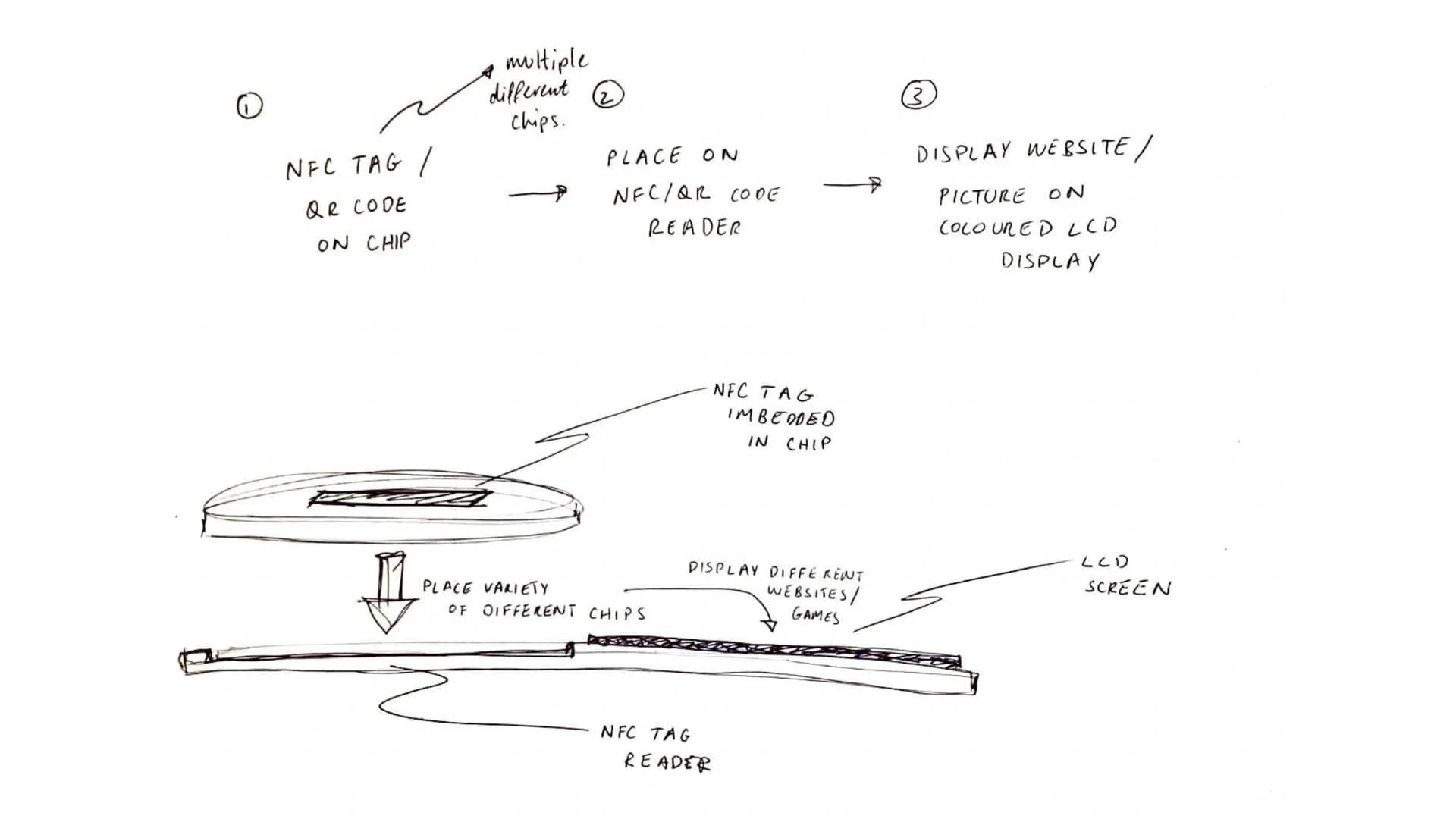
SKETCHING PROCESS OF ELECTRONICS
A plan was made to map out the intended process of the token player. From this, the electronics were formulated to make a working prototype.
-
![PROTOTYPING]()
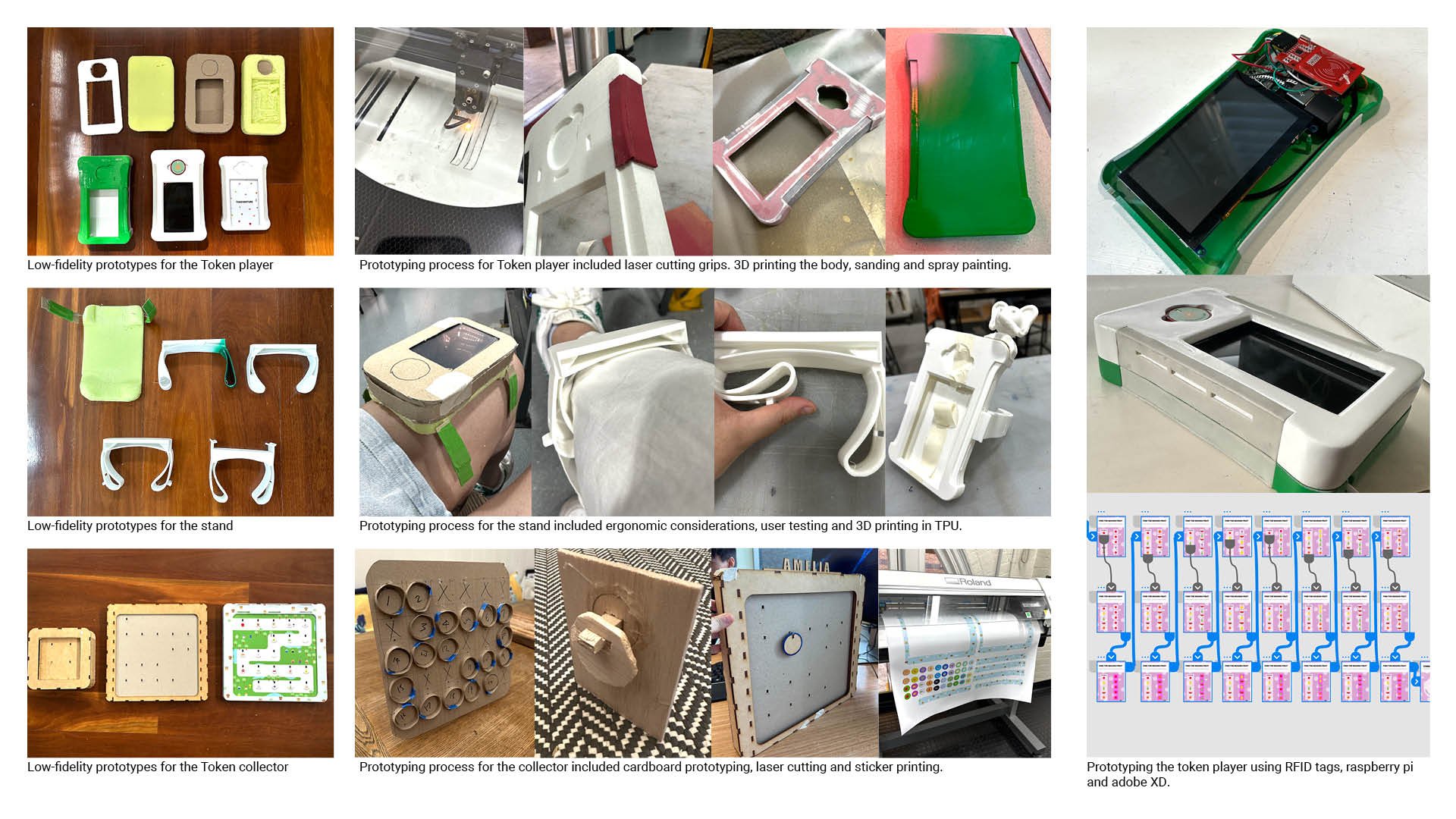
PROTOTYPING
The prototyping process involved the use of cardboard, foam, 3D printing, laser cutting, sticker printing, sanding, spray painting, raspberry pi and Adobe XD. This allowed the low-fidelity prototypes to progress into high-fidelity prototypes.

DELIVER
TOKEVENTURE PHYSICAL MODELS
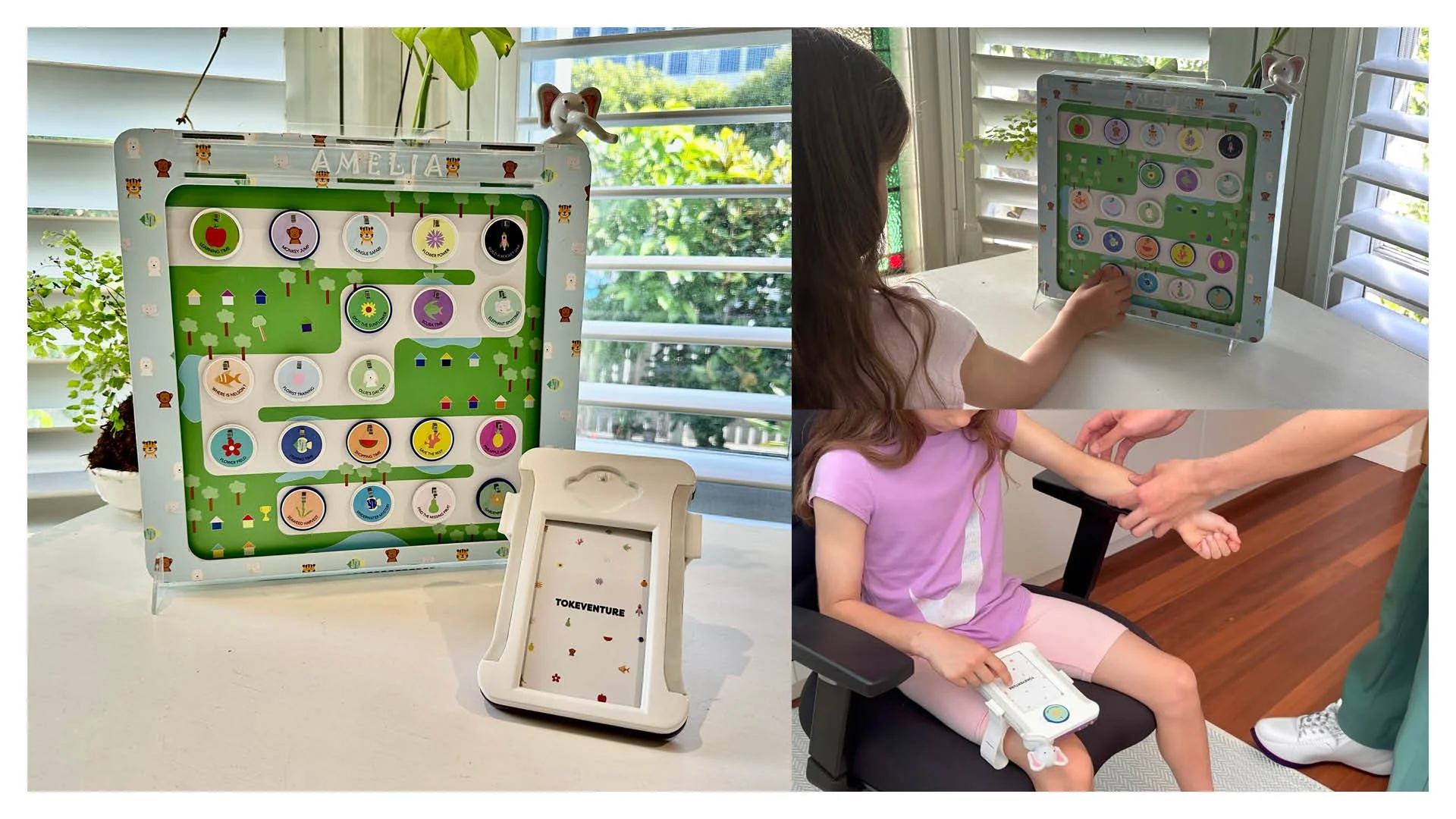
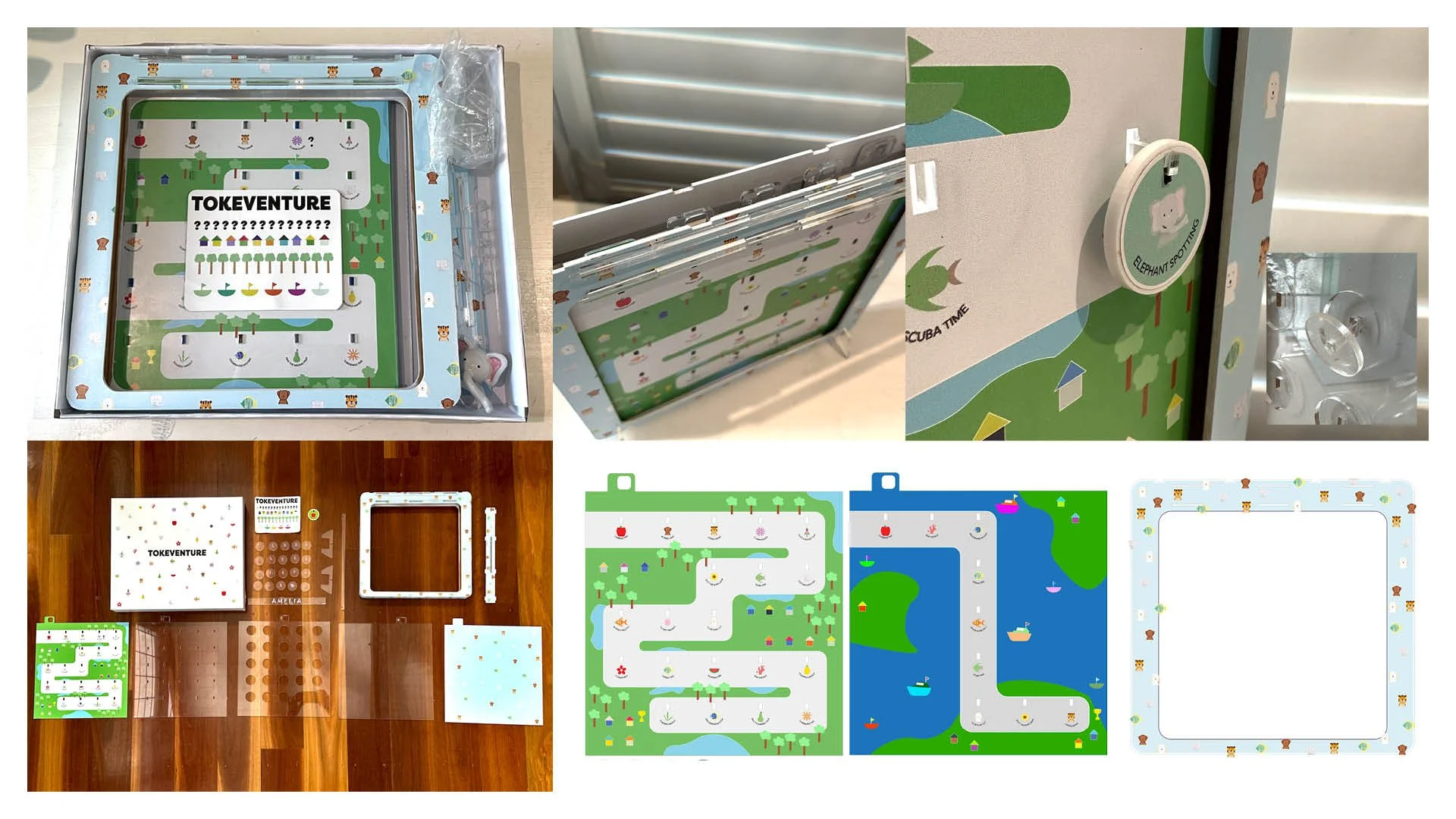
The token collector was designed to be customised to the child. Once received at the doctor, the child and guardian can assemble the kit. It showcases a custom vinyl wrap and nameplate. The backing path is also customised per the treatment plan of the child. The token player was made to have an organic feel, thereby increasing the friendly nature of the design. The leg stand enables it to be used when receiving a blood test and also gives the ability for it to be used at 3 different viewing angles on a table. When both are used in conjunction with the application, the child will start to associate procedures with positive connotations. Overall, Tokeventure aims to improve the mental health of these children, whilst also instilling hope in their lives.
-
![]()
TOKEVENTURE
The main aspects of the product include a token player and a token collector.
-
![]()
TOKEN PLAYER
The token player was made to be adaptable to various situations. The stand allows it to be viewed at different angles, on a table and on the child’s leg. The use of the player first starts with the medical professional adding a token to the player.
-
![]()
TOKEN COLLECTOR
Each child gets given a Tokeventure kit. Inside the kit comes a customised flatpack collector that is made up of a base and various dividers. The child can assemble the kit and use the token holders to store their tokens. Depending on the treatment the child undergoes, a custom path is made using vinyl stickers.

TOKEVENTURE APPLICATIONS
A Tokeventure app was created to enable the education and digital rewards aspect of the process. Once the education token is scanned (NFC tags) using a phone, education specific to the child’s treatment plan can be undertaken. This involves educating the child about their surroundings, as well as using an interactive style game to educate them about the steps of the procedures.
The application also allows the child to keep a digital record of their progress. Once collected tokens are scanned, digital prizes can also be won.
TOKEN PLAYER GAMES
A Raspberry Pi module, NFC reader and LCD screen were utilised to create a working prototype of the model. A bigger 3D-printed external casing was also made to house the internal components. Adobe Xd games linked to NFC tags were also utilised to give the ability for the child to put a token in the module to play the game.
Test the games below.
CAD MODELS & MANUFACTURING
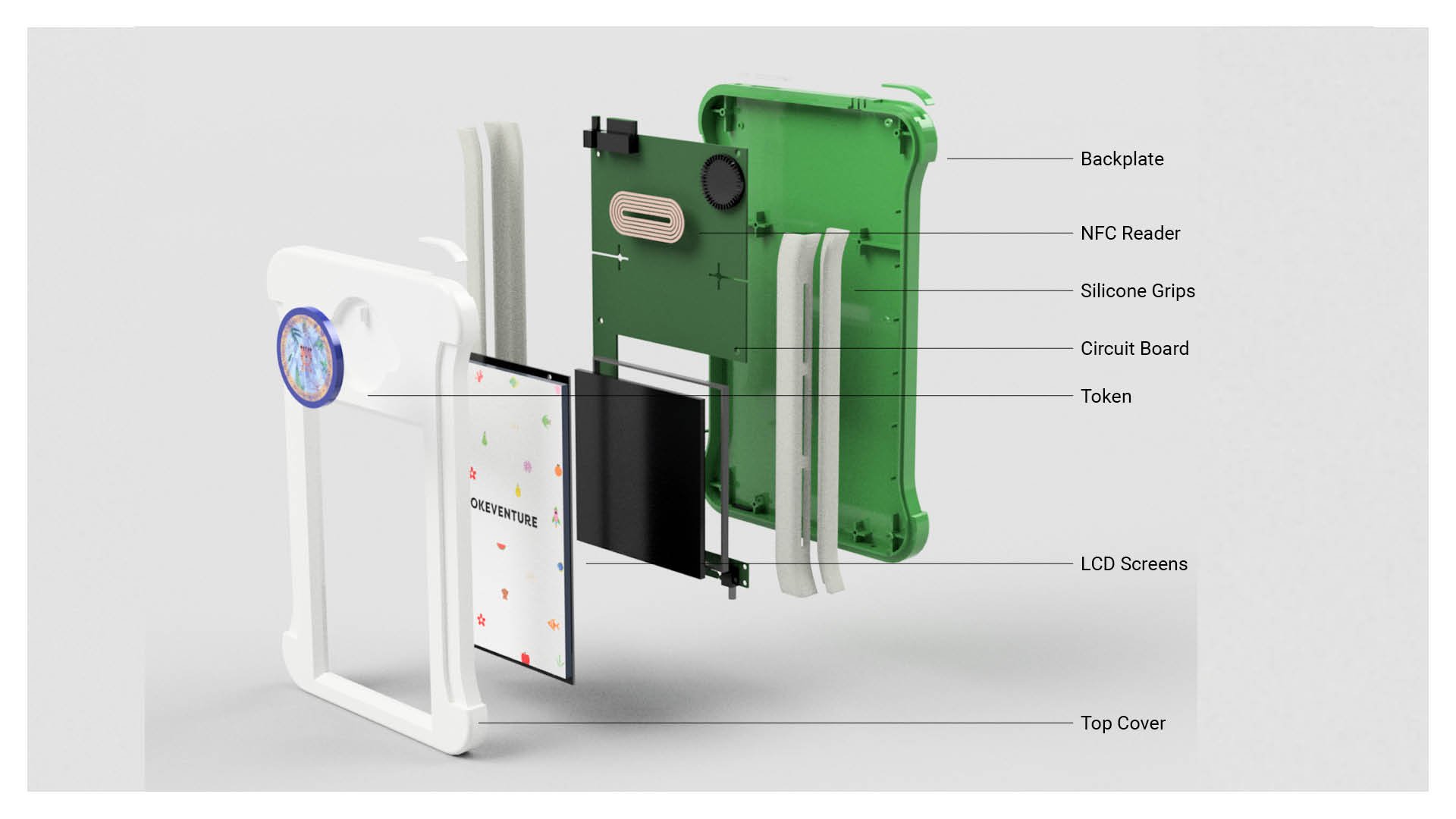
The token player was made to be injection moulded. Through this, the backing plate can be customised per hospital colours. The backing legs were made to be 3D printed using TPU. The token collector was made to be laser cut, thereby decreasing costs. The main materials used include acrylic and MDF. The custom body and journey plate of the collector are both customised using vinyl stickers.
-
![]()
TOKEVENTURE CAD MODEL
-
![]()
EXPLODED VIEW : TOKEN PLAYER
External body made using injection mouding.
-
![]()
EXPLODED VIEW : TOKEN COLLECTOR
Made using laser-cut MDF and acrylic